Contents
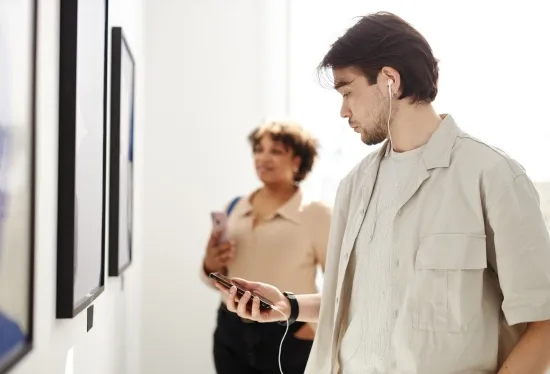
For decades, the audio guide has been an essential tool for helping visitors discover heritage. But travellers’ habits have changed radically: highly connected, looking for personalisation and independence, they no longer want to be limited to fixed content.
Faced with this shift, tourism offices have a real challenge: modernise their offer without blowing their budget. This is where artificial intelligence brings a practical answer.
Is the traditional audio guide outdated?
High maintenance and management costs
Physical audio guides require heavy investment: buying the devices, maintenance, regular cleaning, replacing batteries, managing losses… A permanent cost that weighs on public budgets.
A fixed experience that doesn’t adapt to the visitor
The same route and the same content for every profile: families, students, seniors and foreign travellers. As a result, some get bored, others find the information too complex, and many switch off.
Falling short of younger generations’ expectations
Younger generations travel with their smartphones and expect an experience as smooth as Spotify or Netflix. The “plastic box with headphones” audio guide feels outdated to them.
What tourists really want today
Independence and flexibility
They want to visit whenever they like, without fixed times or the need to book a guide.
Personalised experiences
An architecture enthusiast is not looking for the same tour as a family with children. Content tailored to each visitor has become the norm.
24/7 access in their own language
International travellers expect reliable content in their own language, on their own phone.
AI as a lever to reinvent the cultural experience
Real-time personalisation
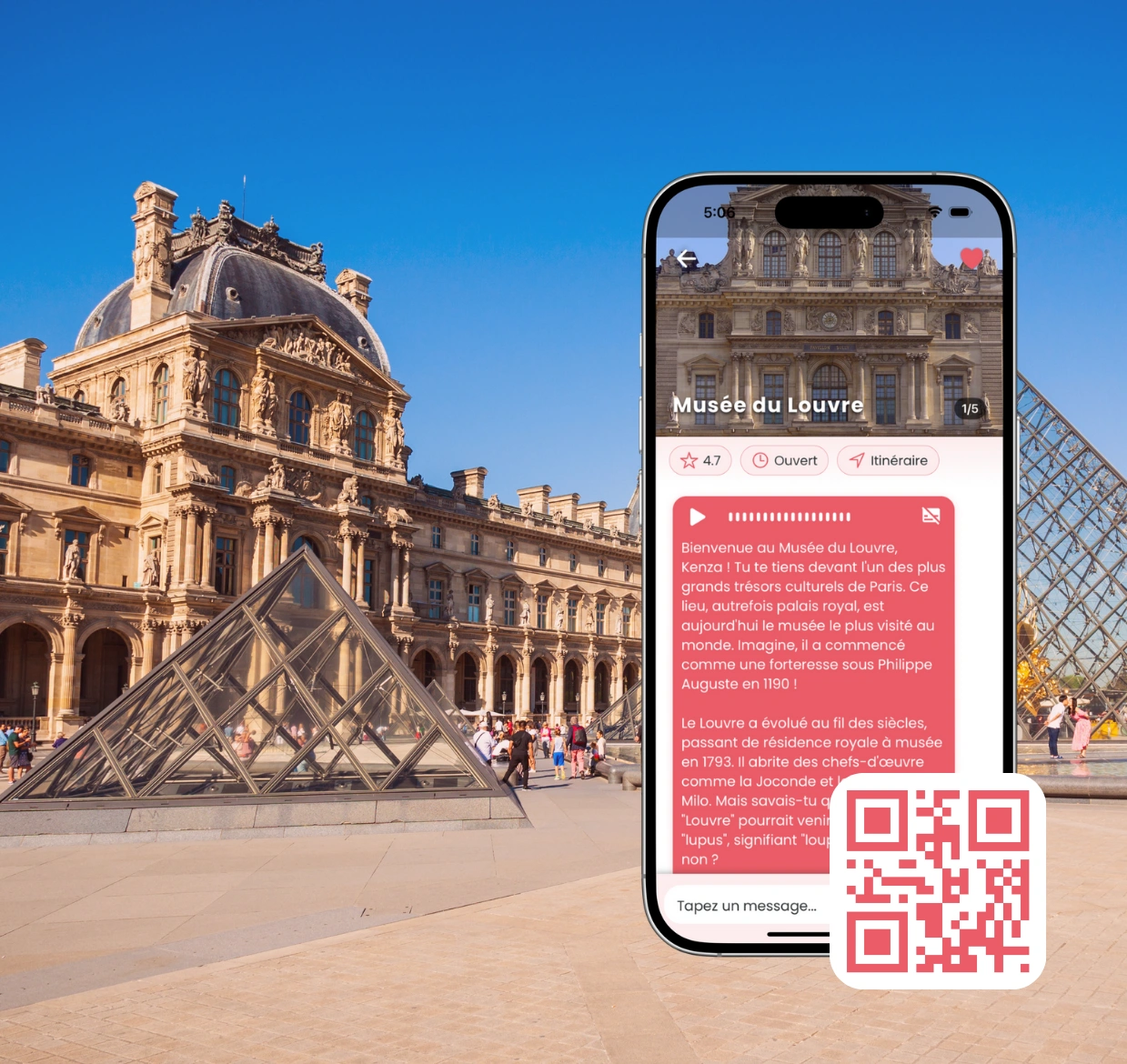
Artificial intelligence makes it possible to offer tours that adapt to each visitor’s interests. Content is no longer standard but genuinely tailor-made.
Instant multilingual access
With automated translation and speech synthesis, the experience is instantly available in several languages, at no extra cost to the office.
Lower costs and easier management
No more buying and managing a stock of audio guides. A mobile app considerably reduces costs while modernising the destination’s image.
The benefits for tourism offices
Reaching a younger, connected audience
With a modern tool available on a smartphone, the tourism office reconnects with a generation that no longer always walks through its door.
Offering a distinctive service
A smart audio guide sets the destination apart. Innovation becomes a communication and visibility asset.
Showcasing local heritage
With AI, every place can be told in a lively way, adapted to different profiles and available anywhere, even outside opening hours.
Conclusion: the tourism office of the future is already here
Traditional audio guides have served well, but their time has passed. Tourism offices now have the opportunity to move to a new generation of tools: digital, personalised and accessible guides, able to appeal to international tourists and residents alike.
Guidly supports tourism offices and local authorities in this digital transition. If you want to modernise your services and offer a cultural experience that meets today’s expectations, get in touch.
Discover Guidly for tourism professionals: demo, use cases and integration for tourism offices and local players.