In short
Two days in Marseille: the Old Port, Le Panier, the Mucem and Notre-Dame de la Garde on day one, then the Calanques (on foot from Luminy or by boat), the Corniche and the Vallon des Auffes on day two. In summer, Sugiton calanque requires a free online booking, and the hills can be closed on high fire-risk days: check the day before. You don’t need a car.
Contents
Between the Old Port, the lanes of Le Panier and the turquoise water of the Calanques, Marseille is perfect for a weekend. Here is what to do in Marseille in 2 days: an itinerary that mixes city and nature, with up-to-date practical information for 2026.
With Guidly, every street in France’s oldest city tells you its story: the app finds the places around you and creates an audio guide based on your interests, in your language, and you can ask it questions as you go.
Day 1: the Old Port, Le Panier and the Bonne Mère
Morning: the Old Port and Le Panier
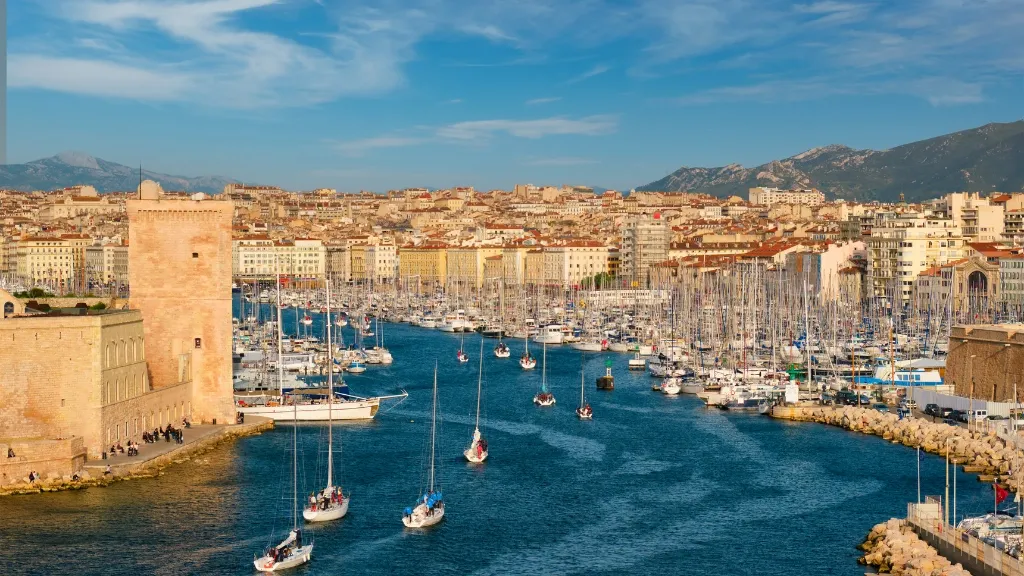
Start with the morning fish market on the Quai des Belges and Norman Foster’s mirrored canopy, where you see yourself upside down. Then climb into Le Panier, often called the oldest neighbourhood in France, founded by the Greeks 2,600 years ago: stepped lanes, colourful façades, street art and the Vieille Charité, a 17th-century almshouse.
Lunch
Eat in Le Panier or by the port. For a real bouillabaisse, choose a restaurant that follows the Marseille bouillabaisse charter and expect to pay over €60: for less, it is usually not the traditional recipe.
Afternoon: the Mucem and Fort Saint-Jean
The Mucem, the Museum of European and Mediterranean Civilisations, with its lace-like concrete shell. The footbridge linking it to Fort Saint-Jean and the fort’s gardens are free to visit, with a superb view over the harbour entrance.
Evening: Notre-Dame de la Garde
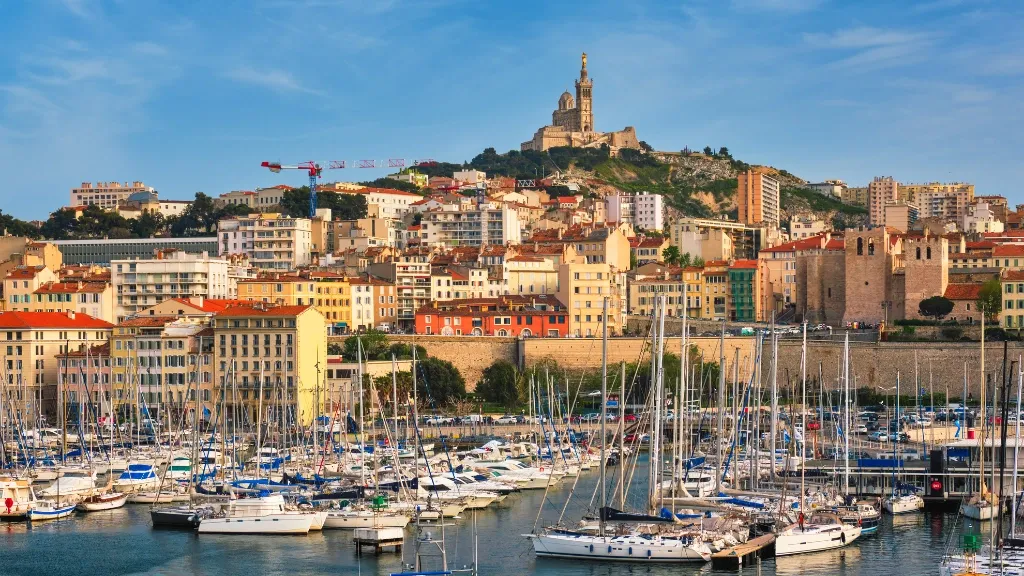
Go up to the “Bonne Mère” at the end of the day (bus 60 or the tourist train): the basilica is free, and the view over the city, the islands and the sea at sunset is the best in Marseille. Then have dinner at the Old Port or on the Cours Julien.
Day 2: the Calanques and the Corniche
Morning: the Calanques
Two options, depending on your fitness:
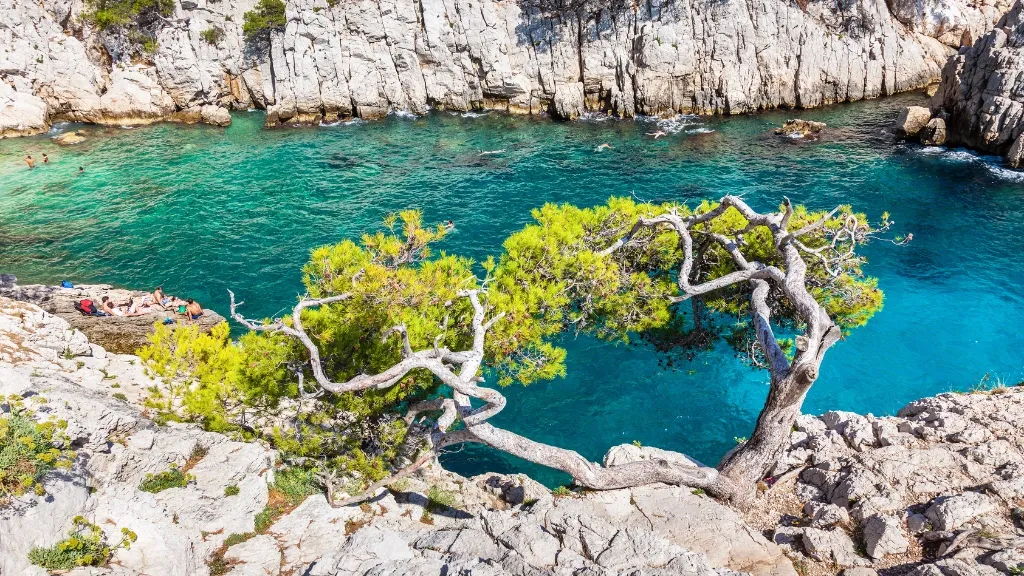
- On foot: from the Luminy campus (bus B1), about 45 minutes downhill to Sugiton calanque and its turquoise water. Wear good shoes, bring water and keep energy for the climb back.
- By boat: from the Old Port, a cruise follows the Calanques all the way to Cassis, with no effort required.
Two summer rules to know: Sugiton calanque requires a free online booking in peak season (late June to late August and some weekends), and access to the hills can be banned on high fire-risk days. Check the day before on the Calanques National Park or prefecture website.
Lunch
Picnic in the calanque, or have lunch in Cassis if you went by boat.
Afternoon: the Vallon des Auffes and the Corniche
The Vallon des Auffes, a tiny fishing harbour with colourful cabanons tucked under a bridge, then the Corniche Kennedy and its views of the islands. Swim at the Catalans beach, the Prado beaches or from the rocks of Malmousque.
Evening
Watch the sunset from the Corniche, then have dinner at the Vallon des Auffes or in L’Estaque, where you can try panisses and chichis frégis.
If you have an extra half-day
- The Château d’If and the Frioul islands, by shuttle boat from the Old Port: the prison of The Count of Monte Cristo and wild coves.
- Le Corbusier’s Cité Radieuse, a UNESCO World Heritage site, and its rooftop terrace.
- The Palais Longchamp and its spectacular water tower.
Marseille for every kind of traveller
- Couples: sunset at Notre-Dame de la Garde, dinner at the Vallon des Auffes and a boat trip through the Calanques.
- Families: the tourist train up to the Bonne Mère, the Frioul by boat, the Prado beach and Parc Borély. With Guidly, switch on kids mode (ages 3–8).
- Friends: the Cours Julien, its bars and street art, and the guinguettes of L’Estaque.
Practical tips
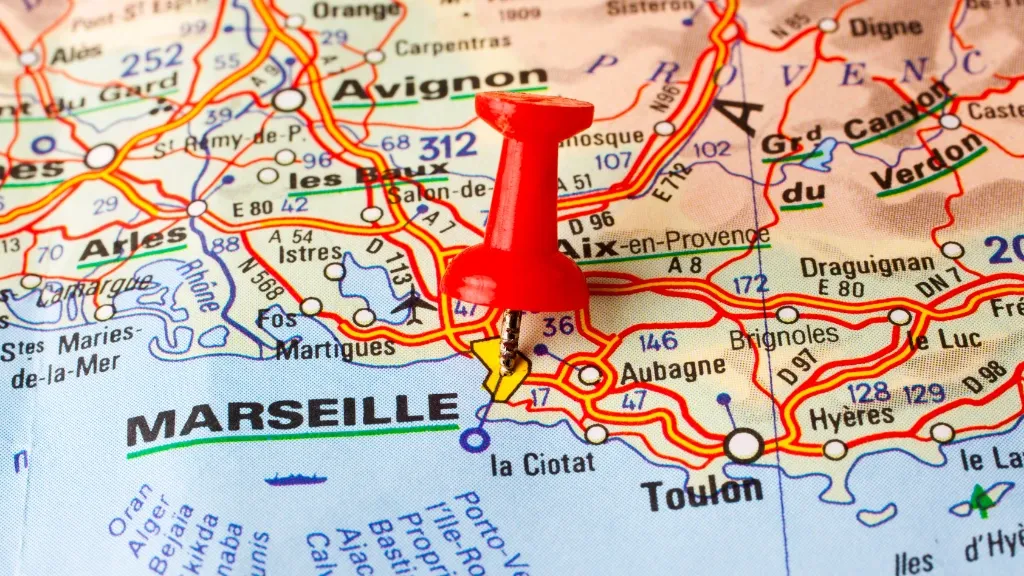
- Getting there: about 3h15 from Paris by TGV to Saint-Charles station, a 10-minute walk from the Old Port.
- Getting around: the RTM metro, trams and buses, plus shuttle boats to the Frioul, L’Estaque and Pointe-Rouge. The centre is walkable.
- Calanques: free booking for Sugiton in peak season, possible closures on fire-risk days in summer.
- When to go: spring and September–October, to swim without the crowds or the July–August heat.
FAQ
What should I do in Marseille in 2 days?
The Old Port, Le Panier, the Mucem and Notre-Dame de la Garde on day one, then the Calanques, the Vallon des Auffes and the Corniche on day two. Add the Frioul islands and the Château d’If if you have an extra half-day.
How do you get to the Calanques without a car?
On foot from Luminy (bus B1 from the Rond-Point du Prado metro station) for Sugiton, or by boat from the Old Port. In summer, book Sugiton for free online and check that the hills are open.
Do you need to book Sugiton calanque?
Yes, but only in peak season (late June to late August and some weekends in June and September). Booking is free and opens three days before your visit. The rest of the year, access is free.
When is the best time to visit Marseille?
Spring (April–June) and early autumn (September–October): the weather is mild, the sea is often warm enough to swim in September, and there are fewer crowds than in summer.
Can you visit Marseille in 2 days without a car?
Yes. The centre is walkable, public transport reaches Notre-Dame de la Garde, the beaches and Luminy, and shuttle boats run to the Frioul and L’Estaque.
Plan your next trip with Guidly: a personal audio guide, in 12+ languages, across 9 million places.