In short
Three days in Prague: the Old Town, the Astronomical Clock, Charles Bridge and Prague Castle on day one; the Jewish Quarter of Josefov, Vinohrady and Letná Park on day two; Petřín Hill, Strahov Monastery, the New Town, the Dancing House and a black light theatre show on day three. The centre is walkable, with a 72-hour transport pass for the rest. The Jewish Quarter’s sites close on Saturdays.
Contents
Prague, the enchanting capital of the Czech Republic, welcomes you with cobbled lanes, baroque spires and bridges steeped in history. Whether you are planning a romantic trip, a family stay or a budget city break, here is what to do in Prague in 3 days so you don’t miss a thing.
With Guidly, every spire and every lane tells you its story: the app finds the places around you and creates an audio guide based on your interests, in your language, and you can ask it questions as you go.
Day 1: the historic heart of Prague
Morning: the Old Town and Charles Bridge
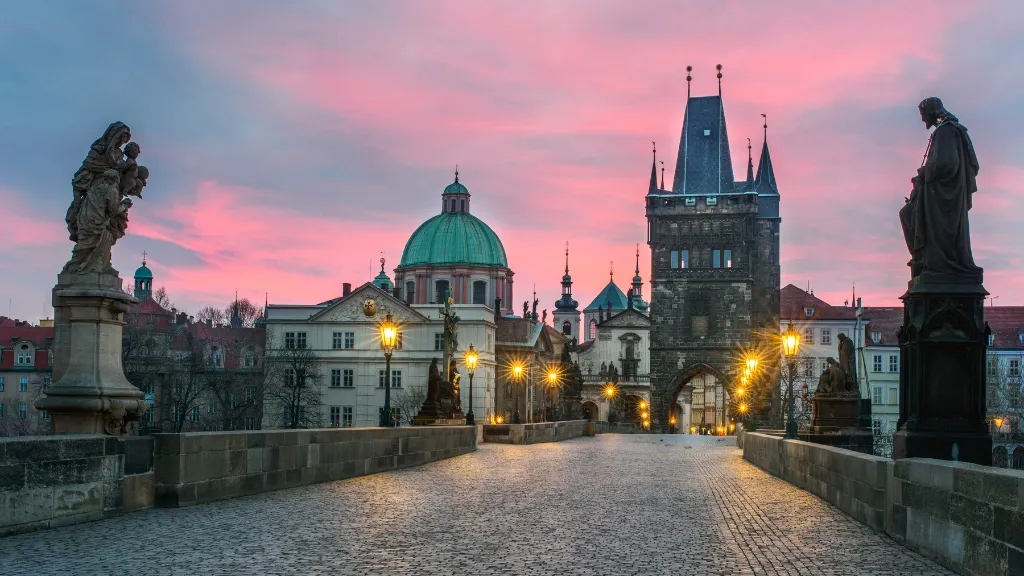
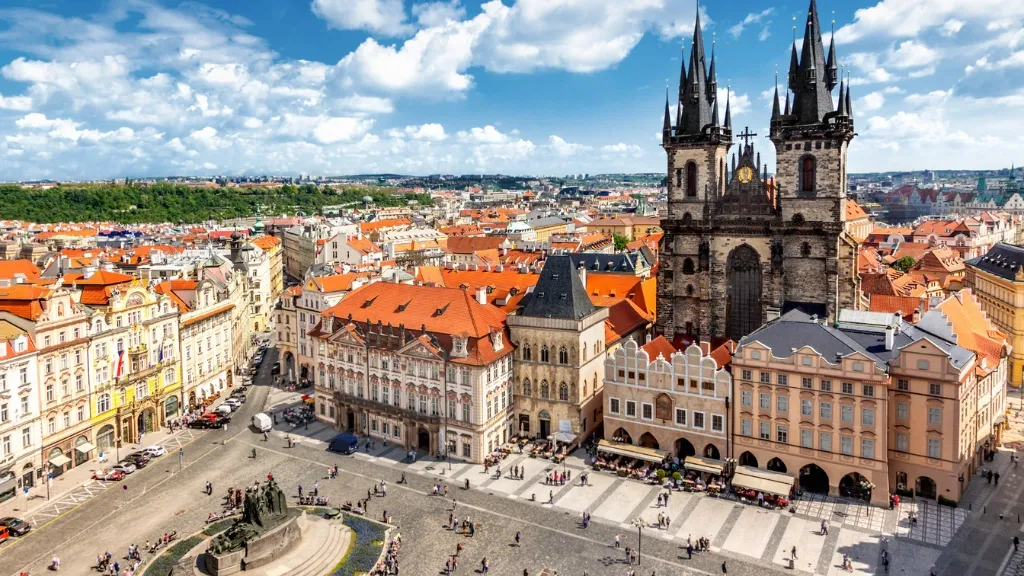
- Start in the Old Town (Staré Město) and its historic square.
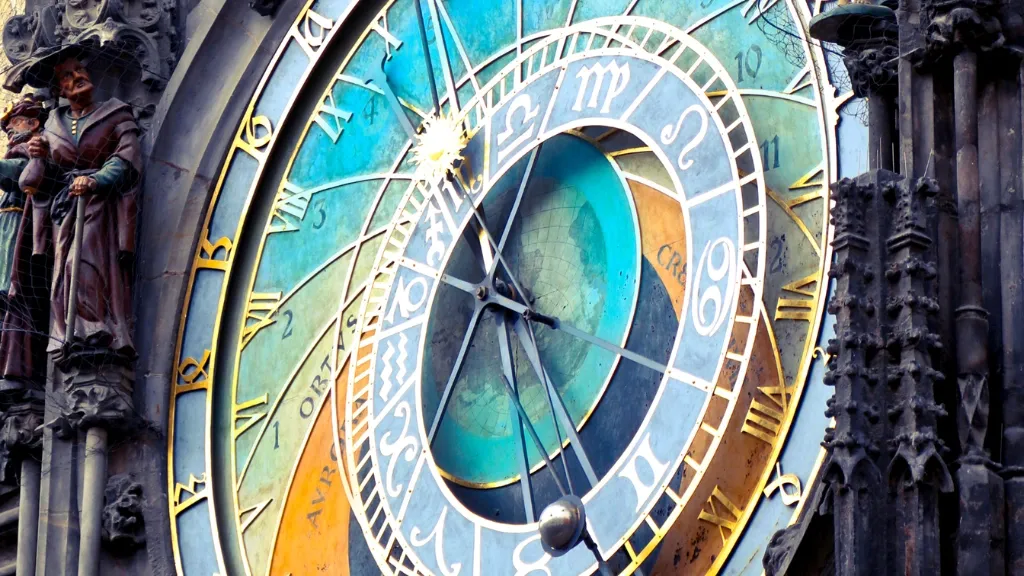
- Watch the Astronomical Clock and its medieval figures strike the hour; ask Guidly to decode its complex symbolism.
- Local tip: cross Charles Bridge early in the morning, before the crowds arrive, for a uniquely romantic atmosphere.
Lunch: traditional food in Malá Strana
- Settle into a traditional tavern in Malá Strana (the Lesser Town).
- Try a hearty Czech goulash or grilled sausages, with a local beer, famously good value.
Afternoon: Prague Castle
- Climb up to Prague Castle, one of the largest castle complexes in the world.
- Explore St Vitus Cathedral, the Old Royal Palace and the famous Golden Lane.
- Practical tip: book your ticket online to save time.
Evening: a classical concert
- End the day with a classical concert in one of the city’s baroque churches. Prague is the city of Mozart’s Don Giovanni and of Dvořák.
Day 2: bohemian Prague, culture and food
Morning: Josefov, the Jewish Quarter
- Explore Josefov, Prague’s former Jewish ghetto, a place full of history and emotion.
- Don’t miss the Old-New Synagogue and the Old Jewish Cemetery. Note that the Jewish Museum sites and the Old-New Synagogue are closed on Saturdays and Jewish holidays.
- With kids: Guidly’s kids mode (ages 3–8) tells the story of the quarter and the legend of the Golem at their level.
Lunch: Czech specialities
- Prague is great for travellers on a food budget: the cooking is hearty and affordable.
- On the go, try a trdelník, the spiral pastry sold all over the centre.
- For a full meal, go for smažený sýr (fried cheese) or roast duck with red cabbage.
Afternoon: modern architecture and views
- Head to Vinohrady or Letná Park for a more local, artistic atmosphere.
- Take a break at the top of Letná Park for a panoramic view over Prague’s rooftops, especially romantic at sunset.
Evening: historic pubs
- End the day in one of the many historic pubs to taste Czech beer, considered among the best in the world.
Day 3: viewpoints and contemporary Prague
Morning: Petřín Hill and its “Eiffel Tower”
- The funicular: use your transport pass to ride up to the top (check it is running, as it sometimes closes for works).
- Petřín Lookout Tower: nicknamed the “little Eiffel Tower”, it offers the best 360° view of Prague.
- The Mirror Maze: a fun, historic attraction, ideal with kids.
- Our tip: walk down through the gardens and orchards to Strahov Monastery and its legendary library.
Lunch: the New Town (Nové Město)
- Wenceslas Square: the heart of the country’s modern history, with its equestrian statue and the National Museum.
- Local lunch: step away from the main streets to find a jídelna (a traditional canteen) or a modern bistro. Prices here are far better than around Charles Bridge.
Afternoon: modern art and hidden passages
- The Lucerna Passage: an elegant early-20th-century arcade with David Černý’s upside-down horse.
- The Head of Franz Kafka: behind the Quadrio shopping centre, a huge kinetic sculpture whose steel layers rotate endlessly.
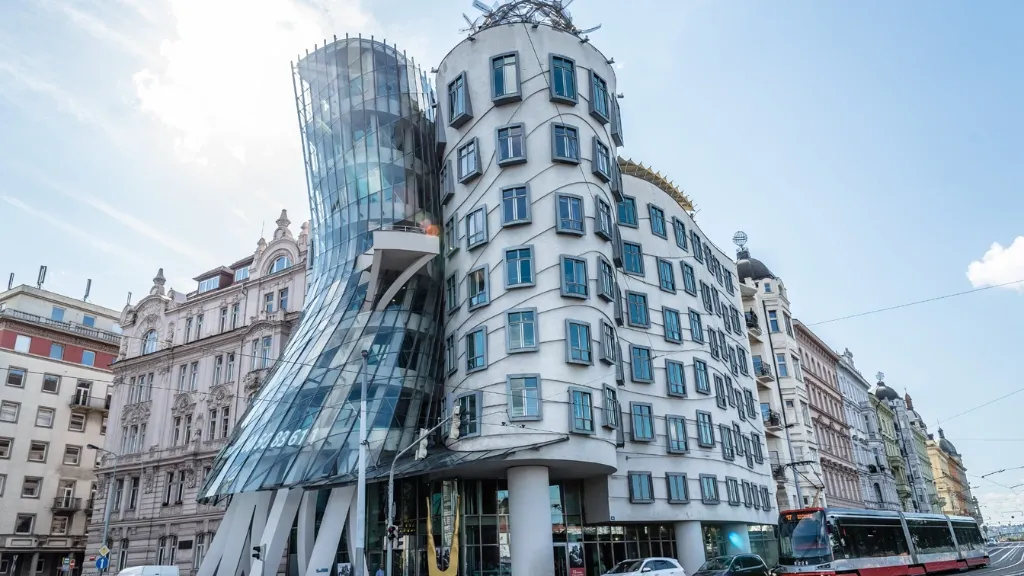
- The Dancing House: Frank Gehry’s deconstructivist building on the riverbank. Its rooftop bar is perfect for a drink with a view of the river.
Evening: black light theatre
- A Prague speciality: a wordless show based on optical illusions, UV light and music, accessible to everyone whatever their language.
- One last beer in a neighbourhood bar to toast the beauty of Bohemia.
Practical tips
- Transport: Prague’s network is one of the most efficient in Europe. A 72-hour pass covers the metro, buses, trams and the Petřín funicular. Tram 22 crosses the most beautiful historic districts and stops right by the castle.
- Bookings: book the castle, classical concerts and black light theatre shows a few days ahead.
- Money: the currency is the Czech koruna (CZK). Cards are accepted almost everywhere, but keep a little cash for tips and street stalls. Avoid exchange offices in tourist areas and use bank ATMs.
- Comfort: you will walk a lot on cobbles, so bring comfortable shoes.
- From the airport: bus 119 to the Nádraží Veleslavín metro station is the cheapest option; the Airport Express (AE) bus runs to the main railway station in about 30 minutes.
More capitals: Vienna in 3 days • Berlin in 3 days • the most beautiful European capitals.
FAQ
When is the best time to visit Prague?
Spring (April to June) and autumn (September to October): mild temperatures, beautiful light and fewer crowds than in summer.
What are the must-sees in Prague in 3 days?
Prague Castle, Charles Bridge, the Old Town and its Astronomical Clock, the Jewish Quarter, Petřín Hill and Malá Strana.
How do you get around Prague?
On foot in the historic centre, and by tram, metro and bus for the rest, with a day or 72-hour pass.
Is Prague expensive?
Compared with other European capitals, Prague is still fairly affordable, especially away from the most touristy areas.
How do you get from Prague airport to the city centre?
Take bus 119 to Nádraží Veleslavín, the terminus of metro line A, or the Airport Express (AE) bus to the main railway station, in about 30 minutes.
Plan your next trip with Guidly: a personal audio guide, in 12+ languages, across 9 million places.